


Fast Dispatch
• In stock
Delivery via Royal Mail
7-Day Returns Let us know within 14 days of delivery if you wish to return your order.
Shop with Confidence If something is not right, we will help put it right.
Popular Pick A popular choice from this collection.
We Accept
Description


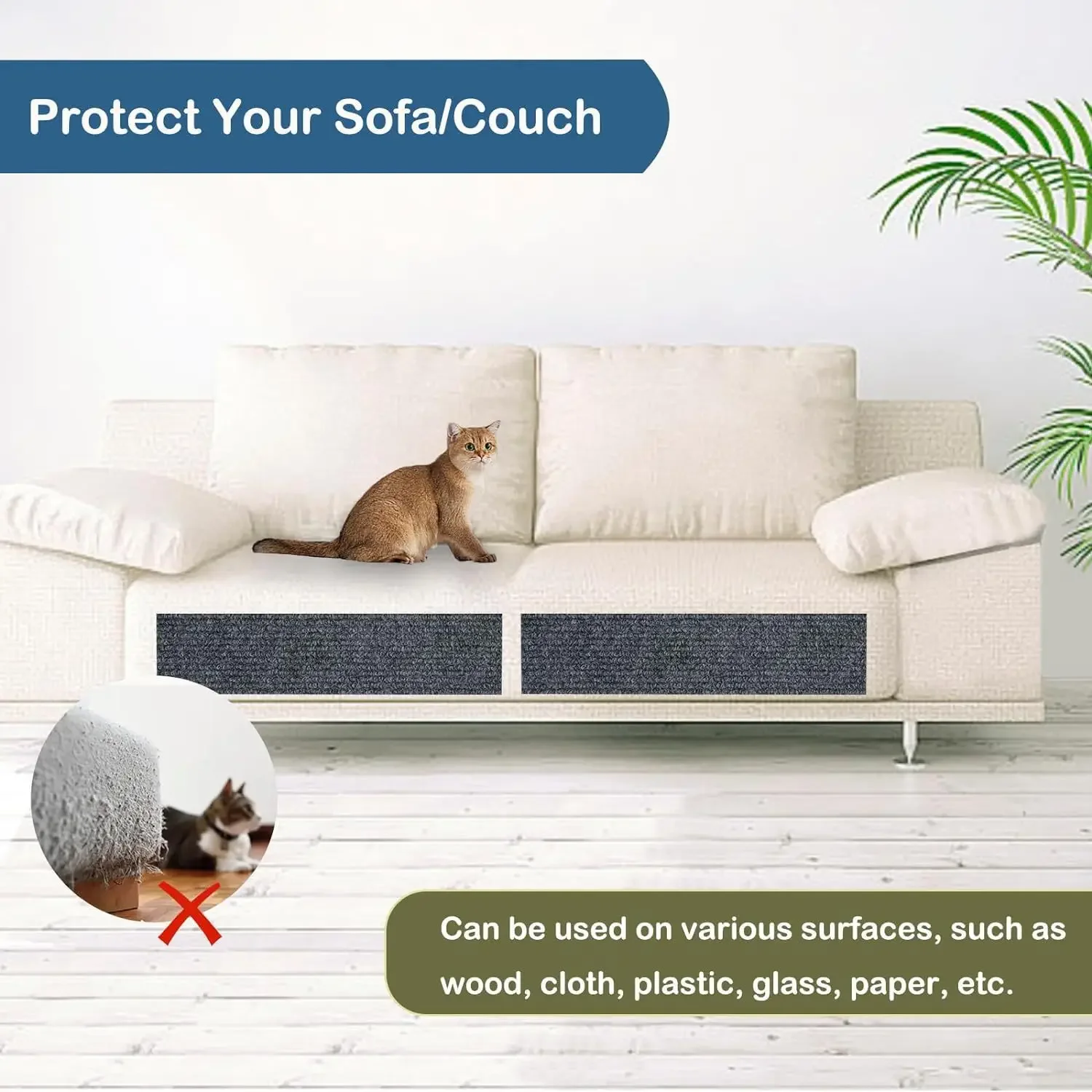
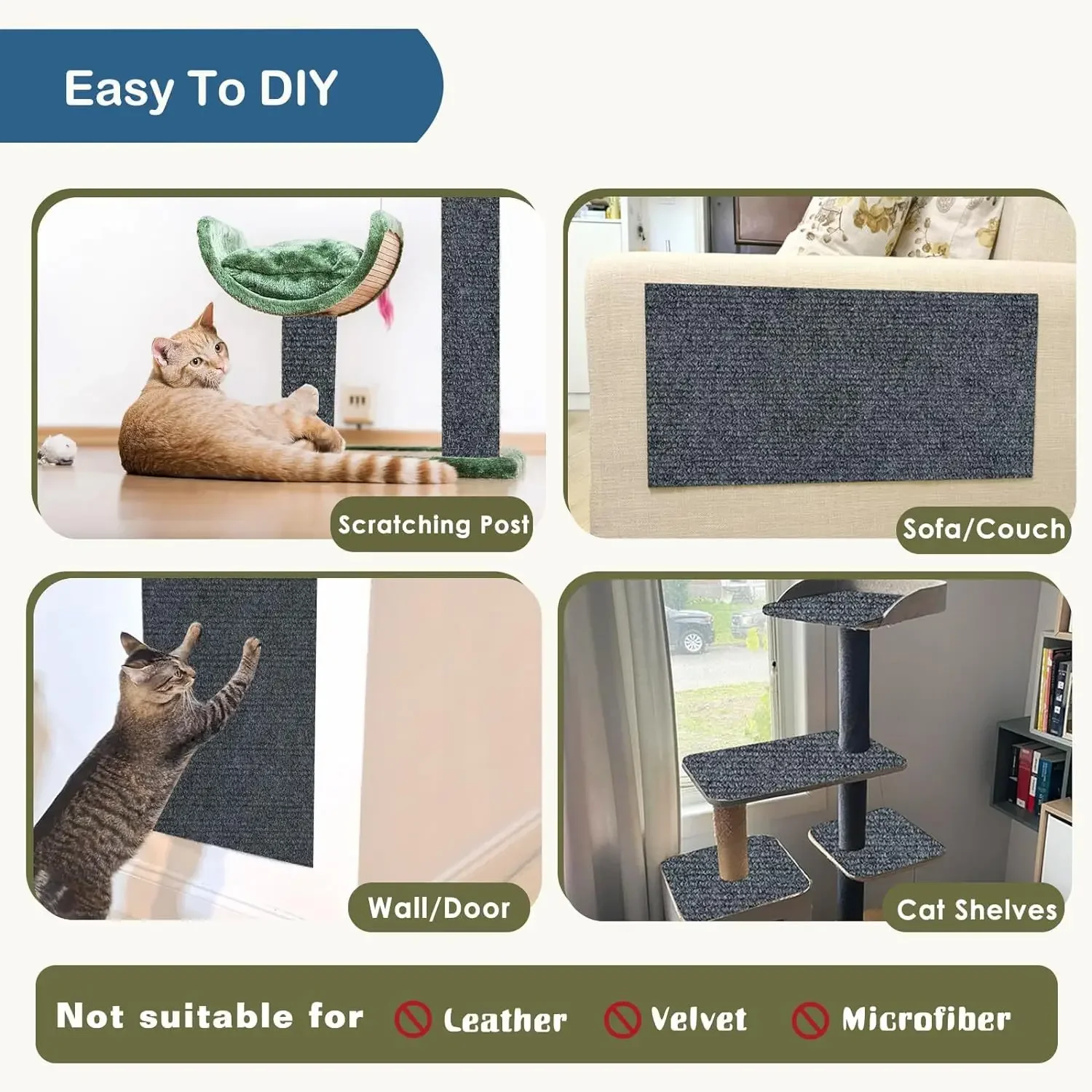
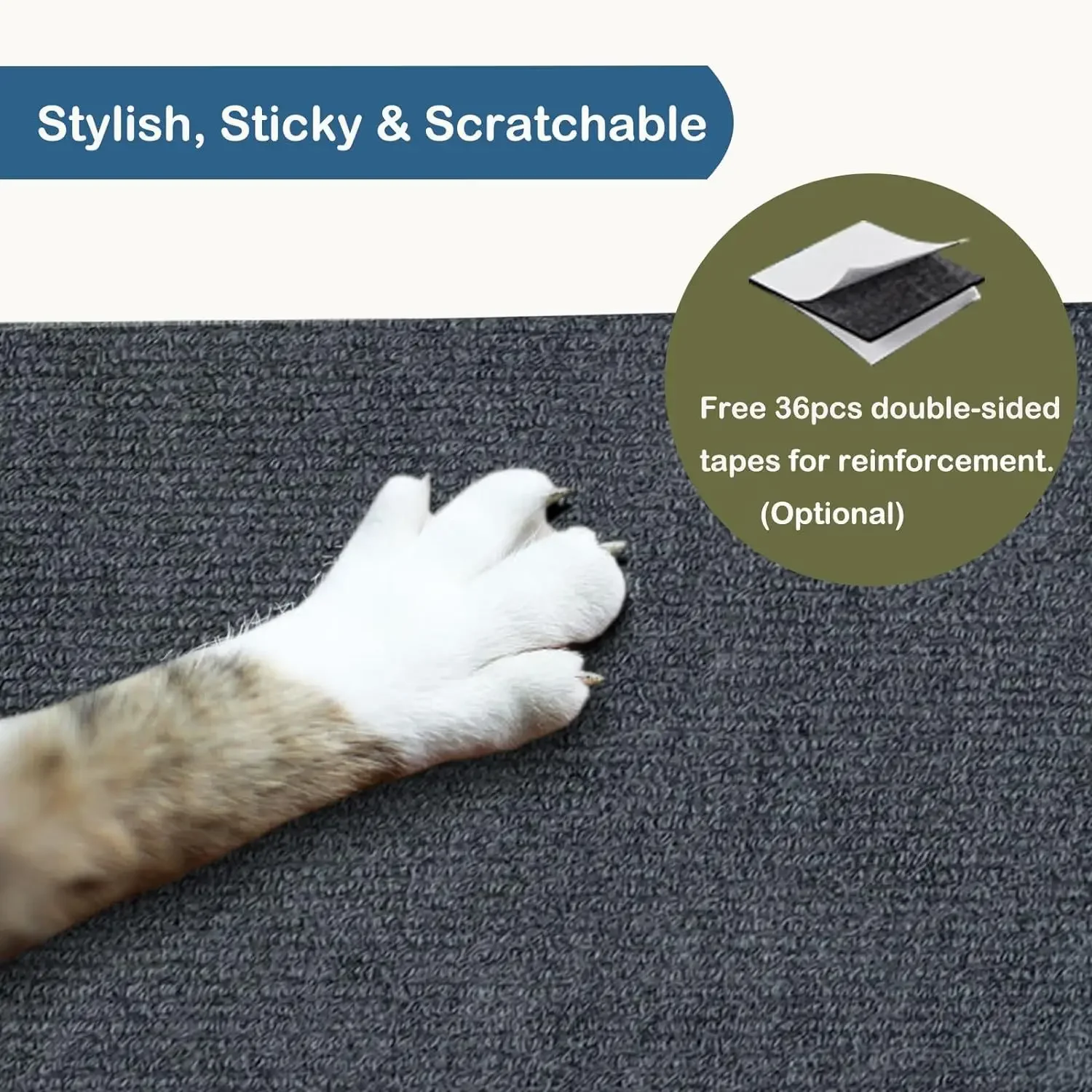
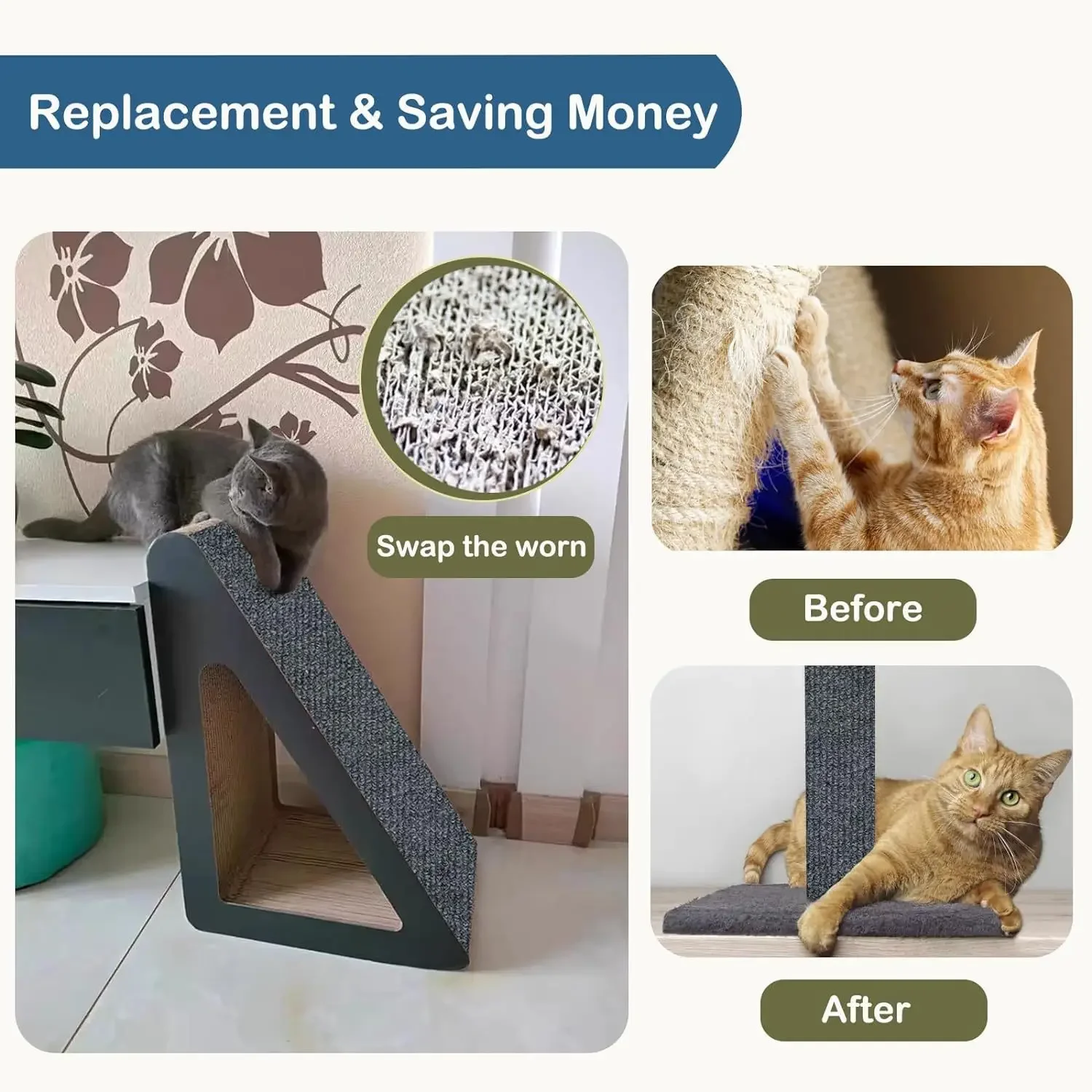
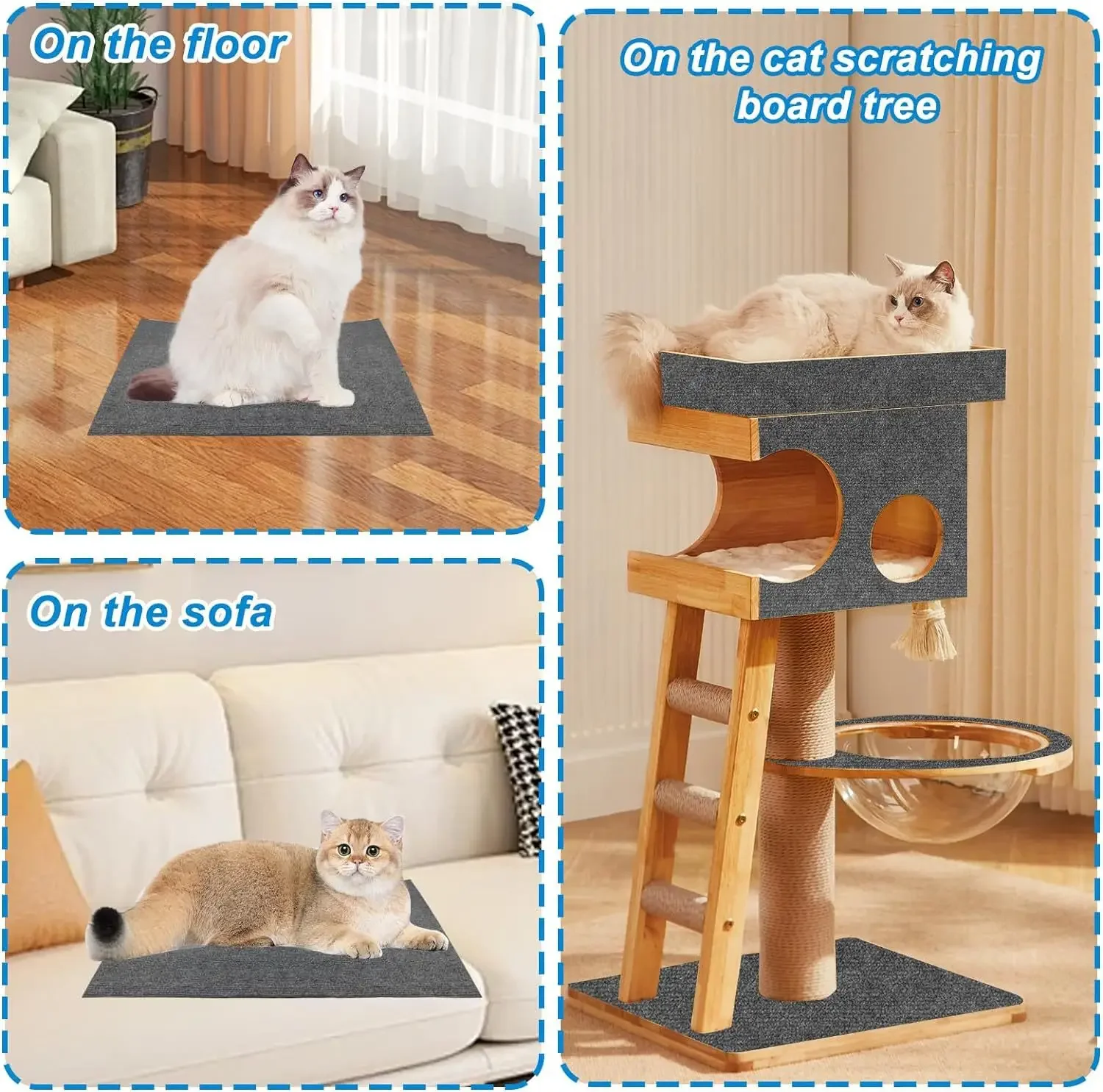


Create a Scratching Area Around the Spaces Your Cat Already Chooses
Cats do not always scratch where a conventional post happens to stand. Sofa arms, furniture corners, walls, doors and other upright surfaces can become attractive because they provide the position, height and resistance an individual cat prefers.
This self-adhesive scratching mat gives you a flexible way to place a carpet-style scratching surface directly over a compatible area. Use it to create a dedicated scratching zone, cover a frequently targeted section of furniture or cut a customised piece for a wall, corner, panel or compatible cat running wheel.
The mat can be trimmed with scissors to suit the available space. Once cut, remove the protective liner, align the material carefully and press the adhesive backing onto a clean, dry and compatible surface.
Available in six sizes and eight colours, it offers a practical alternative to relying exclusively on a freestanding scratching post.
Key Benefits
-
Creates a dedicated carpet-style scratching area for cats
-
Helps shield the covered section of a compatible sofa or other surface
-
Self-adhesive backing removes the need for separate glue during initial installation
-
Trimmable design can be shaped around furniture, walls and corners
-
Suitable for vertical or horizontal installation on compatible surfaces
-
Can be cut into smaller panels for targeted coverage
-
Useful for sofa arms, furniture sides, wall sections, doors and smooth panels
-
May be fitted to certain compatible cat running wheels
-
Textured surface gives claws a defined area to engage
-
Flexible construction follows flat surfaces and broad, gentle curves
-
Six size options for different coverage requirements
-
Eight colour options to coordinate with different interiors
-
Single-layer scratching-pad format
-
No batteries, charging or electrical components required
-
One mat can be used as supplied or customised before installation
A Flexible Alternative to a Freestanding Scratching Post
A conventional scratching post requires its own area of floor space and may not correspond with the place your cat naturally visits.
This mat allows the scratching surface to be positioned more selectively. It can be installed:
-
Where scratching already occurs
-
At a height that suits the individual cat
-
Vertically for cats that prefer to stretch upwards
-
Horizontally for cats that scratch floors or low surfaces
-
Across a broad furniture panel
-
Around a suitable corner
-
On part of a compatible running wheel
-
In a dedicated indoor cat area
The mat is flexible rather than freestanding. It must be attached securely to a suitable supporting surface and should not be presented to a cat as an unsupported loose sheet.
Helps Shield Frequently Targeted Areas
When installed correctly, the mat forms a physical layer between the cat’s claws and the covered section beneath it.
It may be used over compatible areas such as:
-
Sofa arms
-
Sofa sides
-
Upholstered furniture panels
-
Bed-base sides
-
Selected wall sections
-
Internal doors
-
Sealed wooden panels
-
Glazed tiles
-
Smooth glass panels
-
Suitable floor sections
-
Broad furniture corners
Only the area completely covered by the mat receives this additional layer. It cannot prevent a cat from scratching an uncovered section, moving to another item or continuing an established scratching habit elsewhere.
For more useful coverage, observe precisely where your cat places their front paws and how far they stretch. Select a mat large enough to cover the complete contact area rather than applying a small patch only at the centre of the existing marks.
Designed for Everyday Scratching Behaviour
The carpet-style face provides a textured surface against which a cat can draw their claws.
Cats may scratch for several reasons, including stretching, leaving visible marks and maintaining normal claw-related behaviour. Individual preferences vary considerably: some cats favour carpet, while others prefer sisal, cardboard, wood or another texture.
This mat gives your cat an additional scratching option, but acceptance cannot be guaranteed. Placement, orientation, stability, texture and the cat’s established habits can all influence whether it is used consistently.
If your cat already targets one particular area, installing the mat there will generally give it a clearer purpose than placing it in an unrelated part of the room.
Self-Adhesive Backing
The reverse side features an adhesive layer protected by a peel-away liner.
This allows the mat to be applied directly to a compatible surface without adding liquid glue, nails, staples or separate adhesive strips during the initial installation.
Adhesive performance will depend on:
-
Surface material
-
Surface texture
-
Cleanliness
-
Dust or grease
-
Moisture
-
Paint condition
-
Temperature
-
Installation pressure
-
Size and weight of the fitted section
-
Frequency and force of scratching
-
Whether the mat is installed flat or around a curve
-
Previous removal and repositioning
-
Age and storage condition of the adhesive
No pressure-sensitive adhesive can be guaranteed to attach equally well to every wall, fabric, leather finish, floor or item of furniture.
Trimmable for a More Precise Fit
The material can be cut before installation, allowing one piece to be adapted to the shape and dimensions of the intended area.
You may trim it to:
-
Reduce the overall width
-
Shorten the length
-
Create a narrow strip for a furniture edge
-
Make separate sections for adjoining surfaces
-
Fit around a broad corner
-
Avoid handles, hinges or decorative fittings
-
Match the width of a compatible cat running wheel
-
Create several smaller scratching patches from a larger piece
-
Round the corners for a more finished appearance
Measure carefully before cutting. Once material has been removed, the original dimensions cannot be restored.
For a cleaner result:
-
Place the mat face-down on a protected, stable cutting surface.
-
Keep the protective liner attached whilst measuring and marking.
-
Mark the required dimensions on the rear liner rather than on the visible scratching face.
-
Use a straight edge where a precise line is required.
-
Cut slowly with sharp, suitable scissors.
-
Check the fit before exposing the adhesive.
-
Trim away loose fibres without pulling them from the main surface.
-
Keep cut edges as smooth and even as possible.
A craft knife may be used only by a responsible adult with an appropriate cutting mat and straight edge. Keep blades, scissors and trimmed material away from children and animals.
Suitable for Vertical Scratching Areas
The mat can be installed vertically on a compatible wall, furniture side or panel.
Vertical positioning may suit cats that prefer to extend their body upwards whilst scratching. To determine the appropriate height, observe the maximum point your cat reaches when standing naturally on their hind legs.
The fitted section should extend sufficiently low and high to cover the complete scratching movement. A small square positioned below the cat’s normal reach may be ignored or may leave the upper surface exposed.
For vertical installation:
-
Use a clean, dry and structurally sound surface
-
Apply the mat without stretching it
-
Press from the centre towards the edges
-
Make sure the upper edge is particularly secure
-
Check that no corner is lifting
-
Keep the cat away until installation is complete
-
Inspect the adhesion regularly after use
Suitable for Horizontal Scratching Areas
The mat may also be positioned horizontally on a compatible floor, platform or other stable surface.
Horizontal placement may appeal to cats that naturally scratch rugs, carpets or floor-level objects.
When installing it in a floor area:
-
Avoid stairs and escape routes
-
Keep it away from doorways where a raised edge could become a trip hazard
-
Make sure every edge lies flat
-
Do not install it over loose, dirty or damp flooring
-
Check the flooring manufacturer’s adhesive restrictions
-
Make sure the fitted mat cannot slide
-
Replace or remove it if the corners begin to curl
-
Do not use it where moisture regularly collects
Permanent marks, finish changes or adhesive residue may occur on some flooring. Always test a concealed area first.
Sofa and Upholstered Furniture Use
The mat may be applied to certain sofa arms, sides and other firmly supported upholstered sections.
Before applying it to furniture, identify the exact material and consult the manufacturer’s care guidance. Adhesive behaviour can differ significantly between tightly woven fabric, velvet, chenille, microfibre, coated textiles, natural leather and synthetic leather.
For sofa installation:
-
Vacuum or remove loose fur and dust from the intended area.
-
Confirm that the upholstery is completely dry.
-
Test a small concealed section with a small offcut if possible.
-
Leave the test in place long enough to evaluate adhesion and removal.
-
Check for fibre pulling, colour transfer, residue or surface distortion.
-
Measure the complete section your cat normally scratches.
-
Cut the mat before exposing the adhesive.
-
Peel away only a small portion of the liner initially.
-
Align the first edge carefully.
-
Continue removing the liner gradually whilst smoothing the mat into position.
-
Press the complete surface and all edges firmly by hand.
-
Inspect the fitted area before allowing your cat to use it.
Avoid applying adhesive material to antique, highly valuable, fragile, loosely woven, deeply textured or already damaged upholstery.
Leather and Synthetic Leather
Supplier imagery includes leather amongst the suggested surfaces. This should not be interpreted as universal compatibility with every leather or leather-effect finish.
Adhesive can interact differently with:
-
Natural leather
-
Bonded leather
-
Faux leather
-
Polyurethane-coated surfaces
-
Vinyl
-
Suede
-
Nubuck
-
Protective topcoats
-
Aged or cracked finishes
Removal could lift a coating, change the sheen, leave residue or worsen an existing damaged area.
Do not apply the mat to leather furniture without first checking the furniture manufacturer’s instructions and testing a concealed section. Avoid suede, nubuck, peeling bonded leather and irreplaceable furniture unless professional advice confirms compatibility.
Walls and Painted Surfaces
The mat may be fitted to certain clean, smooth and sound wall surfaces.
Adhesion and removal results depend on the paint, plaster, primer, texture and condition of the wall. Fresh, chalky, flaking or poorly bonded paint may detach with the adhesive.
Before applying it to a painted wall:
-
Confirm that the paint is fully cured according to its manufacturer
-
Remove surface dust
-
Make sure the wall is dry
-
Avoid damp or mould-affected areas
-
Test a hidden location
-
Check that the paint does not lift during the test
-
Do not apply over cracks or loose plaster
-
Avoid strongly textured walls that prevent full adhesive contact
-
Consider possible redecorating requirements before covering a large area
The product should not be described as damage-free on every painted wall.
Wallpaper and Paper-Covered Surfaces
Although supplier imagery refers to paper as a possible surface, wallpaper and decorative paper coverings can be particularly vulnerable to adhesive removal.
The mat may permanently mark, tear or lift:
-
Wallpaper
-
Paper-backed wall coverings
-
Murals
-
Printed decorative films
-
Delicate surface laminates
Application to wallpaper is not recommended unless the wall-covering manufacturer confirms compatibility and the user accepts the possibility of permanent alteration.
Glass and Glazed Tiles
Smooth glass and glazed tiles can provide a more uniform contact surface when they are clean, dry and free from grease.
Before installation:
-
Clean away dust and oily residue
-
Allow the area to dry completely
-
Avoid installing across grout lines where possible
-
Do not cover cracked glass or loose tiles
-
Keep the material away from heat sources
-
Do not obstruct window catches, vents or safety markings
-
Consider whether adhesive residue could affect the intended use of the surface
Do not install the mat where it could restrict visibility required for safe movement through a glass door or partition.
Wood and Laminated Furniture
The mat may attach to certain sealed wood, laminate and furniture-board surfaces.
Avoid unsealed timber, waxed finishes, fragile veneers, peeling laminates and valuable furniture unless compatibility has been confirmed.
Adhesive may alter the finish or leave residue, particularly after extended contact. Always test a concealed section first.
Doors and Furniture Panels
The mat can create a vertical scratching area on a compatible door or smooth furniture panel.
Keep the fitted material clear of:
-
Hinges
-
Handles
-
Latches
-
Locks
-
Door seals
-
Sliding tracks
-
Ventilation openings
-
Moving joints
-
Electrical components
Open and close the door manually after installation to confirm that the mat does not catch, compress or obstruct normal operation.
Do not alter a specialist safety or fire-rated door without confirming that the application is permitted.
Furniture Corners
A furniture or wall corner may be covered using one wider piece around a broad curve or separate pieces fitted to each flat face.
For a sharp corner, two separately measured sections may sit more securely than forcing the mat into a tight fold. Excess tension around a sharp bend can cause the edges to lift.
When covering a corner:
-
Measure both faces separately
-
Decide whether the curve is broad enough for one piece
-
Avoid stretching the material
-
Press firmly along the change in direction
-
Keep cut edges smooth
-
Check the corner regularly for lifting
-
Remove the mat if an exposed edge begins catching claws
Optional Use on a Compatible Cat Running Wheel
The supplied description also presents the mat as a possible carpeted surface for certain cat running wheels.
It may provide a textured running area and soften ordinary paw contact against the wheel’s existing track. However, no independent sound-reduction figure or universal wheel compatibility has been supplied.
Before fitting it to a running wheel:
-
Read the wheel manufacturer’s instructions.
-
Confirm that adding a self-adhesive liner is permitted.
-
Switch off or immobilise the wheel completely.
-
Measure the internal running width and circumference accurately.
-
Cut the mat so it lies flat without obstructing either side.
-
Keep adhesive and textile material away from bearings, rollers, sensors, joints and moving mechanisms.
-
Avoid thick overlaps that could create an uneven running surface.
-
Press the complete mat securely into position.
-
Check every seam and edge.
-
Rotate the wheel slowly by hand through several complete revolutions.
-
Confirm that the wheel remains balanced and moves normally.
-
Allow supervised use initially.
-
Stop use immediately if the mat shifts, bunches, wrinkles or interferes with the mechanism.
The mat cannot guarantee silent operation. Noise also depends on the wheel structure, bearings, frame, floor, installation and the speed at which the cat runs.
How to Select the Right Size
The available approximate sizes are:
-
30 × 30 cm / 11.81 × 11.81 in — approximately 0.09 m² of coverage
-
30 × 60 cm / 11.81 × 23.62 in — approximately 0.18 m² of coverage
-
30 × 100 cm / 11.81 × 39.37 in — approximately 0.30 m² of coverage
-
40 × 100 cm / 15.75 × 39.37 in — approximately 0.40 m² of coverage
-
60 × 60 cm / 23.62 × 23.62 in — approximately 0.36 m² of coverage
-
60 × 100 cm / 23.62 × 39.37 in — approximately 0.60 m² of coverage
To choose a size:
-
Measure the maximum width of the scratched area.
-
Measure from the lowest claw marks to the highest point your cat reaches.
-
Add a reasonable margin around the existing marks.
-
Account for any corners or curves.
-
Choose a larger size if you intend to create several smaller pieces.
-
Confirm the selected variant before ordering.
-
Do not assume that several mats are included because multiple fitted examples appear in the photography.
Manual measurement may result in an approximate variation of 1–3 mm.
Before Installation
Careful surface preparation is essential for both adhesion and appearance.
Check the Surface
The intended area should be:
-
Clean
-
Completely dry
-
Free from dust
-
Free from grease
-
Structurally sound
-
Smooth enough for broad adhesive contact
-
Able to tolerate pressure-sensitive adhesive
-
Free from loose fibres, flaking paint or peeling coatings
Test a Concealed Area
Before covering a visible section, apply a small offcut to an inconspicuous area where possible.
Assess:
-
Whether the mat adheres
-
Whether the surface changes colour
-
Whether fibres or coating lift
-
Whether residue remains
-
Whether removal damages the finish
A successful small test reduces uncertainty but cannot guarantee identical results after a much larger section remains installed for an extended period.
Plan the Position
Hold the unpeeled mat against the intended location and confirm:
-
Height
-
Width
-
Orientation
-
Edge alignment
-
Corner position
-
Clearance from moving parts
-
Coverage of existing scratch marks
-
Accessibility for the cat
Complete all measuring and cutting before removing the backing liner.
Installation Instructions
Step 1 – Prepare the Area
Remove dust, loose fur and dry debris.
If the surface manufacturer permits cleaning, use a suitable method and allow the area to dry completely. Do not apply the mat over cleaning-product residue.
Step 2 – Measure and Mark
Measure the intended coverage area accurately.
Mark cutting lines on the rear protective liner. Check every dimension before cutting.
Step 3 – Trim the Mat
Cut along the marked lines with sharp scissors.
Keep the liner attached during cutting and check that the finished edges are even.
Step 4 – Test the Fit
Place the trimmed mat against the area without exposing the adhesive.
Confirm that it covers the intended section and does not interfere with furniture movement, doors, mechanisms or ventilation.
Step 5 – Begin at One Edge
Peel back a short section of the protective liner.
Avoid removing the entire liner at once, particularly when installing a large piece.
Step 6 – Align Carefully
Position the first edge and check that the mat is straight.
The adhesive may begin gripping as soon as it touches the surface, so accurate initial alignment is important.
Step 7 – Apply Gradually
Continue peeling the liner away whilst pressing the mat into position.
Work slowly from one side towards the other. Smooth from the centre outwards to reduce trapped air and wrinkles.
Do not stretch the material during application.
Step 8 – Secure the Edges
Press firmly across the complete surface, paying particular attention to:
-
Upper edge
-
Lower edge
-
Corners
-
Cut sections
-
Curves
-
Seams between adjoining pieces
Step 9 – Inspect the Installation
Check that:
-
The mat lies flat
-
No backing is exposed
-
No edge is curled
-
There are no loose cut fibres
-
The underlying object still functions normally
-
The cat cannot reach a pocket of exposed adhesive
Step 10 – Supervise Initial Use
Observe the first scratching sessions.
Remove or refit the mat if it shifts, detaches, folds or creates an edge that could catch a claw.
Introducing the Mat to Your Cat
Some cats may use the new surface immediately, while others may need time to investigate it.
To encourage voluntary use:
-
Install it close to an existing scratching location
-
Match the cat’s preferred vertical or horizontal orientation
-
Make sure it is stable
-
Allow the cat to smell and inspect it
-
Reward voluntary interest with calm praise or an appropriate treat
-
Place a familiar scratching post nearby during the transition
-
Keep the surrounding area quiet
-
Avoid moving the mat repeatedly
-
Redirect calmly if the cat scratches beside it
-
Do not force the cat’s paws against the surface
Catnip may interest some cats but has no effect on others. Use only a pet-appropriate product, in moderation, and only if it is suitable for your individual cat.
Cleaning the Scratching Surface
Loose fur, dust and claw debris may gradually gather within the textured face.
For routine maintenance:
-
Remove loose debris by hand.
-
Use a soft brush or suitable vacuum attachment at low power.
-
Work gently in the direction of the surface texture.
-
Check the edges whilst cleaning.
-
Remove any long loose threads with scissors rather than pulling them.
-
Keep the backing and underlying surface as dry as possible.
Supplier imagery describes the mat as washable and reusable. However, a complete washing method, water-temperature limit, detergent specification and adhesive-cycle rating have not been supplied.
For cautious care:
-
Do not machine-wash the mat
-
Do not tumble-dry it
-
Do not soak the complete product whilst attached
-
Do not saturate a wall, sofa or wooden surface beneath it
-
Avoid bleach
-
Avoid fabric softener
-
Avoid strong solvents
-
Avoid steam cleaning
-
Avoid direct high heat
-
Avoid aggressively scrubbing the adhesive backing
If spot cleaning is necessary, first test a small section. Use a lightly damp cloth and a minimal amount of mild detergent, then remove the residue and allow the surface to dry fully.
Removal
Adhesive behaviour can change over time. Extended installation, heat, pressure, surface type and environmental conditions may affect how easily the mat can be removed.
To remove it:
-
Keep the cat away from the work area.
-
Begin at one accessible corner.
-
Lift the edge slowly.
-
Pull back at a low angle rather than sharply away from the surface.
-
Continue gradually whilst supporting the underlying material where possible.
-
Stop if paint, fibres, leather coating or laminate begins lifting.
-
Do not use blades directly against furniture or walls.
-
Do not apply heat or chemical adhesive remover unless the surface manufacturer confirms that it is safe.
Adhesive residue or finish alteration may remain on some surfaces. Damage-free removal cannot be guaranteed.
Repositioning and Reuse
Supplier imagery presents the mat as removable and reusable.
In practice, the adhesive can collect:
-
Dust
-
Fur
-
Fibres
-
Grease
-
Cleaning residue
-
Small pieces of paint or upholstery material
Each removal may reduce adhesion or affect the underlying surface. A used mat may therefore fail to attach as securely in a new position.
Before reuse:
-
Inspect the complete scratching face
-
Check that the backing remains intact
-
Remove loose contamination without damaging the adhesive
-
Confirm that the new surface is compatible
-
Test adhesion before allowing the cat to use it
-
Do not reuse it if the edges remain raised
-
Do not add an unspecified glue where a cat could contact it
Reusability should be treated as conditional rather than guaranteed for an unlimited number of installation cycles.
Eight Colour Options
The supplied options are:
-
Dark Grey
-
Khaki
-
Light Grey
-
Light Green
-
Dark Blue
-
Brown
-
Black
-
White
Choose the colour shown in the current product selector.
Colour appearance may vary according to:
-
Photography lighting
-
Camera exposure
-
Screen brightness
-
Display calibration
-
Room lighting
-
Textile direction
-
Manufacturing batch
The item received may therefore appear slightly lighter, darker, warmer or cooler than it does on a digital screen.
Product Details
-
Product type: Self-adhesive cat scratching mat
-
Item classification: Scratching pad
-
Intended animal: Cats
-
Main purpose: Creating a carpet-style scratching area
-
Secondary purpose: Helping shield covered sections of compatible furniture or household surfaces
-
Installation style: Peel-and-stick
-
Customisation: Trimmable before installation
-
Surface format: Flexible carpet-style textile
-
Number of tiers: Single layer according to the supplied classification
-
Primary material stated by supplier: Nylon
-
Alternative material wording in supplier description: Non-woven fabric
-
Backing: Self-adhesive layer with protective liner
-
Approximate thickness shown in supplier imagery: 4 mm
-
Available sizes: 30 × 30 cm, 30 × 60 cm, 30 × 100 cm, 40 × 100 cm, 60 × 60 cm and 60 × 100 cm
-
Available colours: Dark Grey, Khaki, Light Grey, Light Green, Dark Blue, Brown, Black and White
-
Shape: Supplied as a rectangular or square mat according to the selected size
-
Suitable orientation: Vertical or horizontal on compatible surfaces
-
Potential locations: Compatible sofas, furniture panels, walls, corners, doors, glass, glazed tiles, sealed wood, floor sections and cat running wheels
-
Power required: None
-
Batteries required: No
-
Charging required: No
-
Separate glue required for initial installation: No
-
Quantity supplied: One mat
-
Measurement tolerance: Approximately 1–3 mm due to manual measurement
Material Information
The primary product specification identifies the material as nylon, while a separate portion of the supplier description identifies it as non-woven fabric.
These terms do not provide a complete technical fibre breakdown. The exact percentage composition of the visible carpet layer, internal backing, release liner and adhesive has not been supplied.
For this reason, the product is most accurately described as having a carpet-style textile scratching surface with a self-adhesive backing.
Claims concerning a precise fibre percentage, recycled content, flame resistance, waterproofing, hypoallergenic construction or independently tested material performance should not be made without supporting documentation.
High-Concern Chemical Declaration
The supplied specification states that no high-concern chemical is identified.
This is a supplier declaration. It should not be interpreted as independent certification that:
-
The product is completely free from every potentially irritating substance
-
The adhesive has undergone a particular laboratory test
-
The material is hypoallergenic
-
The mat is food-safe
-
The product is medical-grade
-
The complete chemical composition has been independently verified
No separate laboratory certificate, adhesive composition report or complete material-safety document has been supplied with the available information.
What You Will Receive
The package contains:
-
1 self-adhesive cat scratching mat in the selected size and colour
Cats, sofas, furniture, running wheels, cutting tools and additional mats shown in example photography are not included.
Unless the product selector expressly states otherwise, selecting one option supplies one mat rather than a set of several colours or sizes.
Important Product Limitations
This mat is intended to create an additional scratching surface and help shield the compatible area beneath it.
It cannot guarantee:
-
That every cat will use it
-
That a cat will stop scratching other furniture
-
Complete protection of uncovered areas
-
Permanent adhesion to every surface
-
Damage-free removal
-
Residue-free removal
-
Compatibility with every sofa fabric
-
Compatibility with every leather finish
-
Compatibility with every wall or paint
-
Unlimited repositioning
-
Unlimited washing and reuse
-
Complete resistance to wear
-
A fixed service life
-
Silent running-wheel operation
-
Improved health or physical strength
-
Prevention of claw problems
-
Suitability for outdoor use
-
Waterproof performance
-
Fire-resistant performance
-
Resistance to deliberate chewing
-
Safe use after the edges have detached
Actual performance and lifespan depend on the cat’s scratching force, frequency of use, installation quality, selected surface, environmental conditions and ongoing maintenance.
Care and Safety Guidance
-
Install the mat only on a clean, dry and compatible surface.
-
Test a concealed area before covering a visible section.
-
Check the furniture, wall or flooring manufacturer’s adhesive restrictions.
-
Measure and cut the mat before exposing the backing.
-
Keep scissors, blades and trimmed material away from animals and children.
-
Do not leave exposed adhesive where a cat can touch or lick it.
-
Press every edge securely.
-
Supervise initial use.
-
Inspect the mat regularly.
-
Trim isolated loose fibres carefully rather than pulling them.
-
Replace the mat if large sections become worn through.
-
Remove it if the backing is exposed.
-
Remove it if an edge repeatedly catches the cat’s claws.
-
Do not allow the cat to chew or ingest the material.
-
Keep it away from open flames.
-
Keep it away from hot appliances and radiators.
-
Do not cover electrical sockets, cables or ventilation openings.
-
Do not install it on damp, mould-affected or unstable surfaces.
-
Do not apply it over peeling paint or damaged upholstery.
-
Do not use it on a running wheel unless the wheel manufacturer permits a fitted liner.
-
Confirm that a lined running wheel remains balanced before use.
-
Do not machine-wash or tumble-dry the mat unless the delivered product includes explicit care instructions permitting this.
-
Stop use if the cat develops irritation or repeatedly catches a claw.
-
Seek veterinary advice if a claw appears torn, painful or trapped.
-
Replace the product when it can no longer remain securely attached or be cleaned effectively.
Frequently Asked Questions
What is this product designed for?
It is a flexible, self-adhesive scratching mat for cats.
It can be used to create a dedicated scratching area or help shield a covered section of compatible furniture, wall, door, panel or floor.
Is it a rigid scratching board?
No. It is a flexible carpet-style mat rather than a freestanding rigid board.
It requires a suitable supporting surface and must be attached securely before use.
Can it protect my sofa?
It can add a physical scratching layer over the section it covers.
It cannot protect uncovered areas or guarantee that your cat will stop scratching another part of the sofa.
Will it stop my cat scratching furniture?
Not necessarily.
The mat offers an alternative surface, but scratching preferences are individual. Positioning it directly over or beside an established scratching location may improve the likelihood that the cat will investigate it.
Is the backing self-adhesive?
Yes. The mat has a peel-and-stick backing protected by a removable liner.
No separate liquid glue is required for the initial application.
Can I trim it?
Yes. The mat can be cut with suitable sharp scissors before installation.
Measure carefully and keep the protective liner attached whilst marking and cutting.
Can it be cut into several smaller pieces?
Yes. A larger mat may be divided into several smaller sections.
Plan every section before cutting and make sure each finished piece has smooth edges and sufficient surface contact.
Which sizes are available?
The supplied sizes are:
-
30 × 30 cm
-
30 × 60 cm
-
30 × 100 cm
-
40 × 100 cm
-
60 × 60 cm
-
60 × 100 cm
Select the required dimensions from the current product options.
Is the size exact?
The measurements are approximate.
The supplier advises allowing approximately 1–3 mm of variation because of manual measurement and production tolerances.
How thick is the mat?
Supplier imagery describes the mat as approximately 4 mm thick.
The written specification does not provide a separate independently verified thickness measurement, so a small production tolerance should be expected.
What is it made from?
The primary specification identifies nylon.
A separate supplier description calls the material non-woven fabric. The exact fibre percentages and the composition of the backing and adhesive have not been supplied.
Can I use it vertically?
Yes, provided it is attached securely to a compatible surface.
Choose a height that covers the area your cat reaches during a full natural stretch.
Can I place it on the floor?
It may be installed horizontally on compatible flooring or another stable platform.
Test the surface first and ensure every edge lies flat so it does not become a trip or claw-catching hazard.
Can it be fitted around a corner?
Yes, depending on the corner shape.
A broad curve may accept one continuous piece. For a sharp corner, two separately cut sections may adhere more reliably than a single piece forced into a tight fold.
Can I use it on fabric upholstery?
It may adhere to certain firmly supported fabrics, but universal compatibility cannot be guaranteed.
Adhesive may pull fibres, leave residue or fail to bond to heavily textured material. Test a concealed section and consult the furniture manufacturer’s guidance.
Can I use it on leather?
Supplier imagery lists leather as a possible surface, but leather finishes vary substantially.
Test a hidden section first. Avoid suede, nubuck, peeling bonded leather, fragile finishes and valuable furniture unless professional guidance confirms compatibility.
Can I use it on painted walls?
It may adhere to certain smooth, clean and fully cured painted walls.
Do not apply it over fresh, dusty, chalky, flaking or poorly bonded paint. Removal may lift paint or leave residue.
Can I use it on wallpaper?
Wallpaper can tear or separate when adhesive is removed.
Use on wallpaper only if its manufacturer confirms compatibility and you accept the possibility of permanent damage.
Can I apply it to glass?
It may be applied to suitable smooth glass after the surface has been cleaned and dried.
Do not cover damaged glass, required safety markings, catches or areas where the mat would obstruct necessary visibility.
Can I apply it to tiles?
Smooth glazed tiles may provide a suitable contact surface.
Avoid loose tiles, damp areas and prominent grout lines that prevent the backing from sitting flat.
Can I apply it to wood?
It may be used on certain sealed wooden or laminated surfaces.
Avoid unsealed wood, fragile veneer, waxed finishes and peeling laminate. Test a concealed area before installation.
Is it suitable for every surface shown in the supplier images?
No adhesive product can be assumed suitable for every version of a broad material category.
Different paints, textiles, leathers, woods and coatings can respond differently. Surface testing remains necessary even when the material type appears in promotional imagery.
Can it be removed?
The mat can be peeled away from some compatible surfaces.
Remove it slowly at a low angle. Damage-free or residue-free removal cannot be guaranteed.
Will it leave adhesive residue?
Residue is possible.
The result depends on the surface, installation period, temperature, pressure and adhesive condition.
Is it reusable?
Supplier imagery describes it as reusable, but actual reusability depends on how clean and intact the adhesive remains after removal.
Dust, fur, paint and upholstery fibres can reduce the backing’s ability to bond again.
Can it be repositioned during installation?
Limited adjustment may be possible before the mat has been fully pressed down.
Repeated lifting can weaken adhesion or affect the surface beneath it. Align the first edge carefully and apply the material gradually.
Is it washable?
Supplier imagery describes the mat as washable, but no complete washing procedure has been supplied.
Routine vacuuming, gentle brushing and cautious spot cleaning are safer than soaking or machine washing. Avoid saturating the adhesive and the surface beneath it.
Can it be machine-washed?
Machine-washing compatibility has not been confirmed.
Do not place it in a washing machine unless the delivered product includes explicit instructions permitting this.
Can it be tumble-dried?
Tumble-drying compatibility has not been confirmed.
High heat may affect the textile and adhesive.
How should I remove cat hair from it?
Use your fingers, a soft brush or a suitable low-power vacuum attachment.
Work gently and inspect the edges after cleaning.
What should I do with loose fibres?
Isolated loose fibres may be trimmed carefully with scissors.
Do not pull long threads, as this could enlarge the damaged area or disturb the surface structure.
Can it be used on a cat running wheel?
It may be fitted to certain compatible wheels if the wheel manufacturer permits an adhesive track liner.
The mat must be measured accurately, kept away from the mechanism and checked for secure, even installation before use.
Will it make a cat running wheel silent?
No sound-reduction testing or decibel rating has been supplied.
The carpeted surface may soften ordinary paw contact, but overall noise depends on the wheel, bearings, frame, floor and running speed.
Does it improve my cat’s fitness?
A running wheel may provide activity for cats that choose to use it, but this mat is only a surface covering.
It cannot guarantee increased exercise, strength or improved health.
Can kittens use it?
It may be suitable for kittens when installed securely and used under supervision.
Remove it if the kitten chews the material, pulls at the edges or attempts to swallow fibres.
Can several cats use the same mat?
Yes, several cats may use the same securely installed scratching area.
More frequent use may increase wear, so inspect the surface and adhesive edges regularly.
How can I encourage my cat to use it?
Place it where your cat already scratches, match their preferred orientation and reward voluntary interest.
Do not force the cat’s paws against the surface.
Should I place it beside an existing scratcher?
You may keep an established scratching post or pad nearby whilst introducing the new mat.
Providing several textures and positions can help accommodate individual preferences.
Which colour should I choose?
Choose from Dark Grey, Khaki, Light Grey, Light Green, Dark Blue, Brown, Black or White according to the current product selector.
Consider both the surrounding décor and the visibility of loose fur.
Will the colour exactly match the photograph?
A completely exact screen-to-product match cannot be guaranteed.
Lighting, screen settings, textile direction and production batches can alter the perceived shade.
Will I receive all eight colours?
No.
The images display the available colour range. Unless a set is expressly offered, the package contains one mat in the selected colour.
How many mats are included?
One mat is included unless the selected product option explicitly states a different quantity.
Is it waterproof?
No waterproof rating has been supplied.
Keep the mat and the surface beneath it away from persistent moisture.
Can it be used outdoors?
Permanent outdoor suitability, weather resistance and ultraviolet resistance have not been specified.
Indoor use is the more cautious default.
Is it fire-resistant?
No flame-resistance certification has been supplied.
Keep it away from open flames, heaters, hot appliances and other ignition sources.
Does “no high-concern chemical” mean independently certified?
Not necessarily.
It is a supplier declaration. No separate independent laboratory report has been supplied with the available product information.
How long will the mat last?
No fixed lifespan can be guaranteed.
Durability depends on scratching intensity, number of cats, installation quality, cleaning, surface compatibility and whether the cat chews or pulls the edges.
When should it be replaced?
Replace or remove the mat if:
-
The scratching surface becomes worn through
-
Large sections detach
-
The backing becomes exposed
-
Corners repeatedly curl
-
Loose threads cannot be controlled
-
The material tears
-
Adhesion becomes unreliable
-
The mat shifts during use
-
It develops persistent contamination or odour
-
The cat begins chewing or ingesting fibres
-
An edge catches the cat’s claws
-
It interferes with a running wheel or another moving object
Payment & Security