


Fast Dispatch
• In stock
Delivery via Royal Mail
7-Day Returns Let us know within 14 days of delivery if you wish to return your order.
Shop with Confidence If something is not right, we will help put it right.
Popular Pick A popular choice from this collection.
We Accept
Description


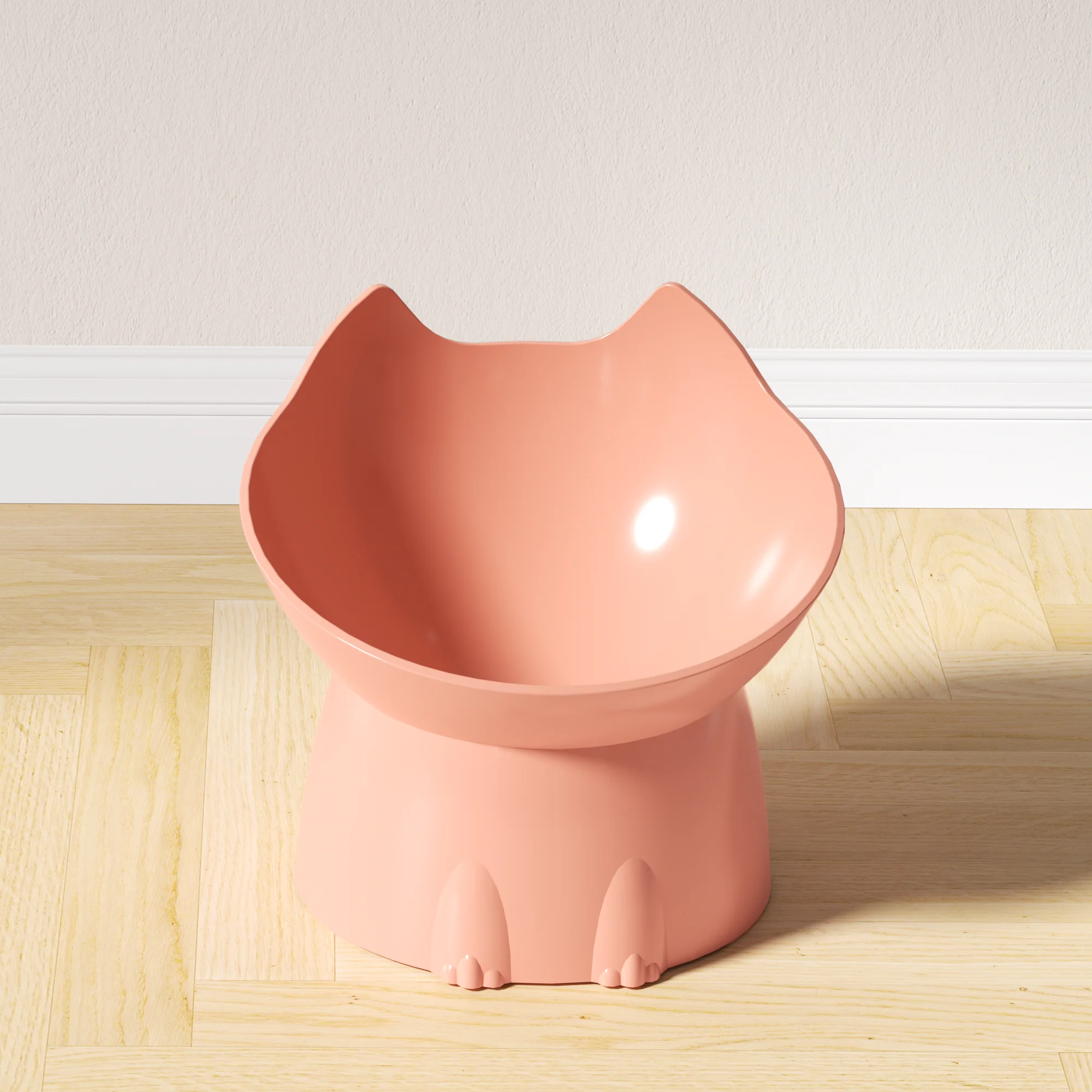


Raised Feeding with a Playful Cat-Inspired Finish
Bring a more considered look to your cat’s everyday feeding area with this raised plastic bowl.
The bowl sits above floor level on a pedestal-style base and features a gently inclined opening, with a lower front edge that gives your cat a clear approach to the food. Its rounded interior creates an open serving area, while the sculpted cat-ear rim and small paw details give the complete design a distinctive feline character.
Suitable for serving appropriate portions of dry food, wet food or treats, this practical single-bowl design combines everyday function with a clean, modern appearance.
Key Benefits
-
Raised pedestal-style design brings the serving area above floor level
-
Inclined opening with a lower front edge for straightforward access
-
Rounded interior without narrow internal corners
-
Suitable for appropriate portions of dry food, wet food and treats
-
May also be used for fresh water when filled below the lowest section of the rim
-
Smooth plastic construction for practical everyday handling
-
Cat-ear silhouette around the upper rim
-
Sculpted paw details around the base
-
Compact single-bowl format for individual feeding areas
-
Suitable for compatible adult cats and kittens
-
Available in a selection of modern colours
-
No batteries, charging or electrical components required
-
No disposable filters or replacement parts required
-
Simple manual cleaning and maintenance
A Raised Alternative to a Floor-Level Bowl
Traditional pet bowls place the food directly beside the floor. This design uses a pedestal-style base to raise the serving area, changing the height from which your cat approaches each meal.
The elevated profile may appeal to cats that naturally prefer eating from a slightly raised surface. It can also create a more defined feeding station and make the bowl easier for the owner to see amongst surrounding household items.
Because cats differ in size, age, mobility and feeding preferences, no single bowl height is ideal for every animal. The bowl should allow your cat to reach the contents naturally without stretching upwards, leaning excessively forwards or appearing unstable.
Observe your cat during the first few meals and discontinue use if the height or shape does not appear suitable.
Gently Inclined for Front-Facing Access
The upper bowl has an inclined profile rather than a completely level rim.
The front section sits lower, creating a clear approach point, while the sides and rear rise around the food. When positioned correctly, your cat can approach the lower edge instead of attempting to eat across the highest part of the rim.
This arrangement may help keep a suitable portion within a more accessible area of the bowl, particularly when the food is placed towards the front and centre.
For correct positioning:
-
Place the bowl on a level surface.
-
Turn the lower section of the rim towards your cat.
-
Position the higher cat-ear section towards the back.
-
Add an appropriate portion without filling above the lowest edge.
-
Make sure your cat can approach from the front without obstacles.
-
Observe the first use to confirm that the height and angle are comfortable for the individual animal.
The precise angle has not been specified. The bowl should therefore be described as inclined or forward-facing rather than as having a particular degree of tilt.
Rounded Interior
The bowl features a rounded internal shape designed to hold an appropriate serving of food without the narrow corners found in some angular dishes.
The smooth curved profile makes it easier to spread wet food across the serving surface, gather remaining pieces towards the centre and wipe the interior during cleaning.
Depending on the type of meal, the bowl may be used for:
-
Dry cat food
-
Wet cat food
-
Mixed feeding portions
-
Cat-safe treats
-
Small supplementary servings
-
Fresh water filled below the lowest point of the rim
The exact capacity has not been supplied. Measure your cat’s normal portion separately rather than using the apparent fullness of the bowl as a feeding guide.
Open Serving Area
The open upper shape gives your cat visible access to the contents and avoids the enclosed appearance of a narrow, deep container.
However, exact internal width, depth and whisker clearance have not been supplied. Individual cats can also respond differently when their whiskers touch the sides of a bowl.
If your cat repeatedly removes food and eats it from the floor, leaves food around the edges, hesitates at the rim or appears uncomfortable, consider trying a wider or flatter feeding dish.
This product should not be advertised as clinically “whisker-friendly” or as preventing whisker fatigue without product-specific evidence.
Distinctive Cat-Ear Silhouette
Two raised points along the rear rim create a recognisable cat-ear outline, adding character without requiring printed patterns or detachable decorations.
The decorative shape is complemented by small moulded paw details around the lower pedestal, giving the bowl a coordinated feline appearance from top to base.
Its clean, solid-colour finish can sit comfortably within:
-
Kitchens
-
Utility rooms
-
Dedicated pet-feeding areas
-
Living spaces
-
Cat rooms
-
Indoor feeding stations
-
Homes with modern or minimalist décor
The ears and paws are decorative design elements. They do not provide an additional feeding, measuring or health-related function.
Plastic Construction for Everyday Use
The bowl is made from plastic according to the supplied specification.
Its moulded construction creates a smooth, practical feeding accessory without electrical parts, filters or complicated mechanisms.
To maintain the surface:
-
Avoid metal knives or sharp feeding utensils
-
Do not scrape dried food away with abrasive objects
-
Avoid scouring pads that could mark the interior
-
Do not expose the bowl to direct flames
-
Keep it away from hot hobs and heaters
-
Do not pour boiling liquids into it
-
Do not microwave it unless the physical product is expressly marked as microwave-safe
-
Do not place it in a dishwasher unless the physical product is expressly marked as dishwasher-safe
-
Replace it if the plastic becomes cracked, deeply scratched, warped or difficult to clean
The precise plastic type, temperature tolerance and food-contact certification have not been supplied. Claims such as BPA-free, food-grade, heat-resistant or dishwasher-safe should not be made without the relevant product documentation.
Suitable for Dry Food
The bowl can be used to serve a measured portion of dry cat food.
For routine dry-food use:
-
Measure the portion according to your cat’s established feeding plan.
-
Place the food towards the centre of the bowl.
-
Avoid filling above the lower front edge.
-
Position the bowl with the lower side facing your cat.
-
Remove crumbs and residue after the meal.
-
Wash the bowl regularly rather than continually topping up old food.
The rounded interior allows loose pieces to remain visible, but the product is not a slow feeder. It contains no ridges, channels or obstacles designed to regulate eating speed.
Cats that eat too quickly may require a purpose-designed slow-feeding bowl and advice from a veterinary professional.
Suitable for Wet Food
The smooth rounded interior is also suitable for serving an appropriate portion of wet cat food.
Wet food can be spread across the central area or placed closer to the lower front section, depending on your cat’s preference.
After serving wet food:
-
Remove uneaten food within the period recommended by the food manufacturer
-
Do not continually add fresh food on top of dried residue
-
Wash the bowl before the next wet meal
-
Rinse away detergent thoroughly
-
Check that no food remains around the rim or decorative contours
-
Dry or drain the bowl before refilling
Wet food can dry firmly onto plastic if left for extended periods. Cleaning the bowl promptly helps prevent residue and odour from building up.
Use with Fresh Water
The bowl may be used for water provided it remains stable and is filled only to a suitable level below the lowest part of the inclined rim.
Because the front edge is lower than the rear, overfilling can cause water to spill more readily than it would from a bowl with a completely level rim.
When using it as a water bowl:
-
Place it on a level, water-resistant surface.
-
Fill it below the lowest front edge.
-
Check the water level throughout the day.
-
Replace the water regularly.
-
Wash the bowl whenever residue, food particles or surface film becomes visible.
-
Use a suitable feeding mat if splashes could affect the surrounding floor.
-
Keep the bowl away from litter trays and heavily trafficked areas.
The exact liquid capacity has not been supplied. Cats requiring a large continuous water source may be better served by a larger dedicated water bowl or suitable drinking fountain.
Suitable for Individual Feeding Areas
The compact single-bowl format is practical for creating a dedicated feeding place for one cat.
In a multi-cat home, separate bowls can make it easier to:
-
Serve different foods
-
Manage individual portions
-
monitor how much each cat consumes
-
Reduce competition around a single serving area
-
Position bowls according to each cat’s preferences
-
Keep food and water in separate locations when preferred
Do not assume that cats will comfortably share one bowl. Even cats that live peacefully together may prefer individual feeding spaces.
Place separate bowls far enough apart that each cat can eat without being blocked or closely watched by another animal.
Choosing an Appropriate Location
Place the bowl in a quiet, accessible indoor area where your cat can approach and leave freely.
A suitable location should be:
-
Level
-
Stable
-
Dry
-
Easy to clean
-
Away from open flames
-
Away from hot appliances
-
Separate from household chemicals
-
Clear of electrical cables
-
Away from busy walkways
-
Free from objects that obstruct the lower front edge
-
Positioned where other pets cannot easily trap or corner the cat
Many cats prefer their feeding area to be separated from the litter tray. Some also prefer water to be positioned away from food.
Your cat’s established habits should guide the final placement.
Stability and Surface Grip
The pedestal-style base provides a broader supporting structure beneath the upper bowl.
However, an anti-slip insert, suction mechanism or rubberised underside has not been confirmed. The bowl may move on particularly smooth floors if pushed firmly.
For greater stability:
-
Place it on a clean, level surface
-
Keep the underside free from food and grease
-
Avoid uneven tiles or unstable furniture
-
Use a suitable non-slip feeding mat if required
-
Do not position it near the edge of a raised counter
-
Avoid overfilling
-
Check that the bowl does not rock before adding food
-
Supervise pets that push or paw vigorously at their bowls
No feeding bowl can be guaranteed completely tip-proof or spill-proof in every situation.
How to Use
Before First Use
-
Remove all packaging and labels.
-
Inspect the bowl for cracks, sharp moulding edges, loose material or transport damage.
-
Wash it by hand using warm water and mild washing-up liquid.
-
Rinse every surface thoroughly.
-
Allow it to dry or drain completely.
-
Place it on a stable feeding surface.
-
Turn the lower edge towards the direction from which your cat will approach.
Serving a Meal
-
Measure your cat’s usual portion separately.
-
Place the food inside the rounded central area.
-
Keep the portion below the lowest part of the rim.
-
Make sure no food is trapped beneath the bowl.
-
Allow your cat to approach voluntarily.
-
Observe how they position their head and body.
-
Remove remaining wet food after the meal.
-
Clean the bowl before residue dries onto the surface.
After Use
-
Discard food that should not be kept.
-
Remove dry crumbs.
-
Wash the interior and rim.
-
Clean the exterior and pedestal when necessary.
-
Rinse away all detergent.
-
Leave the bowl to dry.
-
Return it to the same familiar feeding position.
Introducing the Bowl to Your Cat
A new bowl can differ from your cat’s previous dish in height, shape, colour, smell and surface texture.
Some cats begin using a new bowl immediately, while others require a gradual introduction.
If your cat appears hesitant:
-
Place the new bowl beside the existing bowl before using it
-
Allow your cat to investigate it voluntarily
-
Wash away any packaging odour
-
Add a small amount of familiar food
-
Keep the bowl in a quiet location
-
Avoid forcing your cat’s head towards the contents
-
Maintain the usual feeding schedule
-
Keep the lower edge facing the cat
-
Use the previous bowl again if your cat refuses food
A feeding accessory should support, not interrupt, normal food and water intake. Seek veterinary advice if your cat stops eating or drinking, vomits repeatedly or shows signs of pain.
Portion Control
The bowl is a serving accessory rather than a measuring device.
Its capacity should not determine how much your cat receives. Appropriate portions depend on factors including:
-
Age
-
Body weight
-
Body condition
-
Activity level
-
Neutering status
-
Health
-
Food type
-
Calorie density
-
Number of meals per day
-
Veterinary recommendations
Use a proper measuring scoop or kitchen scale where accurate portion control is required.
Follow the feeding guidance supplied with the food and adjust it according to professional advice for your individual cat.
Cleaning and Care
Regular cleaning helps remove food residue, saliva, oils and dust from the feeding surface.
Routine Hand Washing
-
Remove all remaining food.
-
Rinse away loose residue.
-
Wash the interior, rim, exterior and base with warm water and mild washing-up liquid.
-
Use a soft sponge or cloth.
-
Pay attention to the raised ear shapes and moulded paw details.
-
Rinse thoroughly until no detergent remains.
-
Shake off excess water.
-
Leave the bowl to air-dry or dry it with a clean cloth.
-
Refill it only when it is clean and free from detergent residue.
Cleaning After Wet Food
Wash the bowl after every wet-food serving.
Do not allow wet food to remain inside for extended periods, particularly in a warm room. Dried residue can become more difficult to remove and may collect around the rim.
Cleaning After Dry Food
Empty old crumbs before adding a fresh portion.
Even when the bowl appears visually clean, oils and fine food particles can remain on the surface. Wash it regularly rather than continually topping it up.
Cleaning After Water
Empty and rinse the bowl regularly.
Wash it when you notice:
-
Food particles
-
Dust
-
Fur
-
A slippery surface film
-
Cloudiness
-
Visible marks
-
An unusual smell
Provide fresh drinking water according to your cat’s normal care routine.
Cleaning Products to Avoid
Unless the physical product includes different instructions, avoid:
-
Abrasive scouring pads
-
Steel wool
-
Sharp scrapers
-
Undiluted bleach
-
Strong solvents
-
Oven cleaner
-
Essential oils
-
Heavily fragranced sprays
-
Boiling water
-
Direct steam
-
Harsh disinfectants not approved for food-contact surfaces
If a disinfectant is required, use only a product specifically suitable for the material and intended application, following its instructions exactly.
Inspecting the Plastic Surface
Plastic bowls should be inspected regularly because repeated use and cleaning can gradually mark the surface.
Replace the bowl if you find:
-
Cracks
-
Splits
-
Sharp edges
-
Deep scratches
-
Warping
-
Peeling material
-
Persistent discolouration
-
Persistent odour
-
Roughened areas
-
Damage caused by chewing
-
Residue that cannot be removed properly
-
Instability that was not previously present
Do not attempt to repair a cracked feeding bowl with household glue, tape or filler.
Colour Options
The supplied photography displays several solid-colour examples, including:
-
Black
-
Light grey
-
Mint green
-
Coral pink
-
Teal blue
Current availability depends on the options displayed in the product selector.
The photographs show several bowls together to present different colours. Unless a multi-pack is expressly selected, the purchase should be understood as one bowl in the chosen colour.
Minor differences may occur because of:
-
Lighting
-
Camera exposure
-
Screen brightness
-
Display colour settings
-
Manufacturing batches
-
Surface reflections
Product Details
-
Product type: Raised cat feeding bowl
-
Intended animal: Cats
-
Material: Plastic
-
Shape: Rounded
-
Upper profile: Inclined opening
-
Front access: Lower front section
-
Rear design: Raised cat-ear silhouette
-
Base style: Pedestal-style support
-
Decorative detail: Moulded paw features
-
Suitable contents: Appropriate portions of dry food, wet food, treats or fresh water
-
Feeding mechanism: Manual
-
Electrical components: None
-
Batteries required: No
-
Charging required: No
-
Automatic dispensing: No
-
Slow-feeding structure: Not specified
-
Adjustable height: Not specified
-
Detachable bowl: Not specified
-
Anti-slip insert: Not specified
-
Suction base: Not specified
-
Dishwasher compatibility: Not specified
-
Microwave compatibility: Not specified
-
Exact plastic type: Not specified
-
Exact dimensions: Not supplied
-
Capacity: Not supplied
-
Colour: According to the selected option
-
Quantity: One bowl unless the current selector expressly states otherwise
High-Concern Chemical Declaration
The supplied specification states that no high-concern chemical is identified.
This is a supplier declaration and should not be interpreted as independent certification that the product is BPA-free, hypoallergenic, medical-grade or manufactured from a particular food-contact polymer.
No complete laboratory report, precise plastic composition or independent chemical-testing certificate has been supplied with the available information.
What You Will Receive
The package contains:
-
1 raised plastic cat bowl in the selected colour, unless the product option expressly states a different quantity
Cats, food, feeding mats, decorative platforms and additional colour examples shown in product photography are not included.
Important Product Limitations
This is a manual feeding bowl. It is not:
-
An automatic feeder
-
A timed feeder
-
A portion-measuring device
-
A slow feeder
-
A filtered water fountain
-
A refrigerated food container
-
A heated bowl
-
A sealed food-storage container
-
A veterinary device
-
An anti-vomiting treatment
-
A digestive treatment
-
An orthopaedic product
-
Guaranteed spill-proof
-
Guaranteed tip-proof
-
Confirmed dishwasher-safe
-
Confirmed microwave-safe
-
Confirmed chew-resistant
-
Adjustable unless stated by the delivered product
-
Detachable unless stated by the delivered product
The elevated and inclined shape changes how the meal is presented, but it cannot guarantee improved digestion, prevention of vomiting, reduced neck strain or treatment of any health condition.
Care and Safety Guidance
-
Wash the bowl before first use.
-
Remove all labels and packaging before giving it to your cat.
-
Inspect it for transport damage.
-
Place it on a level and stable indoor surface.
-
Keep the lower edge facing your cat.
-
Do not overfill above the lowest section of the rim.
-
Use a suitable mat if movement or splashing occurs.
-
Do not place it near an open flame or hot appliance.
-
Do not fill it with boiling food or liquid.
-
Do not microwave it unless it is expressly marked as microwave-safe.
-
Do not place it in a dishwasher unless it is expressly marked as dishwasher-safe.
-
Do not use abrasive cleaning tools.
-
Rinse detergent away thoroughly.
-
Do not allow food residue to remain inside for extended periods.
-
Replace fresh water regularly.
-
Do not allow your cat to chew the rim or base.
-
Supervise kittens and cats known to chew household objects.
-
Replace the bowl if it cracks, warps or develops sharp edges.
-
Do not use it as a toy.
-
Do not use it to store food between meals.
-
Keep it away from household chemicals.
-
Consult a vet if your cat has difficulty lowering or positioning their head to eat.
-
Stop using the bowl if its height or shape interferes with normal eating or drinking.
Frequently Asked Questions
Is this bowl designed for cats?
Yes. The supplied product type identifies it as a cat bowl.
Its raised profile, inclined opening and cat-inspired decorative design are intended for feline feeding areas.
What is the bowl made from?
The supplied specification identifies the material as plastic.
The exact polymer type has not been provided.
Is the bowl elevated?
Yes. The serving area is positioned on a raised pedestal-style base rather than resting directly at floor level.
Is the opening tilted?
Yes. The bowl has a lower front section and a higher rear section, creating an inclined opening.
The exact angle has not been supplied.
Which side should face my cat?
The lower section of the rim should face the direction from which your cat approaches.
The higher cat-ear section should remain towards the back.
Can I use it for dry food?
Yes. It can hold an appropriate measured portion of dry cat food.
Remove old crumbs and wash the bowl regularly.
Can I use it for wet food?
Yes. Its rounded interior can be used for wet food.
Wash the bowl after each wet-food serving and do not allow residue to dry inside.
Can I use it for water?
It may be used for fresh water when placed on a level surface and filled below the lowest point of the inclined rim.
Because the front edge is lower, do not overfill it.
Is it a slow-feeding bowl?
No slow-feeding ridges, channels or obstacles are specified.
Cats that eat too quickly may require a purpose-designed slow feeder.
Does it prevent vomiting?
No.
An elevated or inclined bowl cannot guarantee that a cat will not vomit. Repeated vomiting requires veterinary attention rather than reliance on a feeding accessory.
Does it improve digestion?
No product-specific evidence has been supplied to support a digestive-health claim.
The bowl changes the height and presentation of the meal, but it is not a digestive treatment.
Does it protect my cat’s neck or spine?
No medical or ergonomic certification has been supplied.
Some cats may prefer a raised bowl, but the correct feeding height depends on the individual animal’s size, mobility and health.
Is it suitable for kittens?
It may be suitable for kittens that can reach the contents comfortably.
Supervise initial use and do not allow a kitten to chew the plastic.
Is it suitable for senior cats?
Suitability depends on the individual cat.
A raised bowl may appeal to some senior cats, while others may require a different height, a wider dish or a more stable feeding system. Ask your vet if your cat has arthritis, weakness, balance difficulties or another mobility condition.
Is it suitable for flat-faced cats?
The open, inclined shape may be more accessible than some narrow bowls, but suitability cannot be guaranteed for every facial structure.
Observe whether your cat can reach the complete portion without difficulty.
Is it whisker-friendly?
The bowl has an open rounded shape, but exact internal width and whisker clearance have not been supplied.
No clinical whisker-fatigue claim should be made.
Is the bowl anti-slip?
An anti-slip insert, rubberised base or suction feature has not been confirmed.
Use a suitable non-slip feeding mat if the bowl moves on your floor.
Is it tip-proof?
No feeding bowl can be guaranteed tip-proof under every condition.
Place it on a stable surface and supervise cats that push, paw or play with their bowls.
Is it spill-proof?
No.
The raised sides may help contain an appropriate portion, but food or water can still spill if the bowl is overfilled, moved or knocked.
Is the bowl detachable from the base?
A removable or detachable construction has not been specified.
Do not attempt to force the bowl apart unless the physical product clearly includes separate components and instructions.
Is the height adjustable?
No adjustable mechanism has been specified.
Treat it as a fixed-height bowl unless the delivered product states otherwise.
What are the dimensions?
Exact dimensions have not been included in the supplied specifications.
Do not publish measurements taken from similar products, as visually identical bowls may be produced in different sizes.
What is the capacity?
An exact capacity in millilitres has not been supplied.
Use your cat’s measured portion rather than filling the bowl according to its apparent capacity.
Is it dishwasher-safe?
Dishwasher compatibility has not been confirmed.
Hand washing with warm water, mild washing-up liquid and a soft sponge is the cautious default.
Is it microwave-safe?
Microwave compatibility has not been confirmed.
Do not place it in a microwave unless the physical product is expressly marked as microwave-safe.
Is it BPA-free?
No BPA-free certification has been supplied.
The statement that no high-concern chemical is identified does not independently confirm a specific plastic composition.
Is the plastic food-grade?
A specific food-contact material certification has not been supplied.
Avoid making an absolute food-grade claim without documentation from the manufacturer or supplier.
How often should I clean it?
Wash it after each wet-food meal.
For dry food, remove old crumbs and clean the bowl regularly. When used for water, refresh the contents and wash the bowl whenever residue or surface film appears.
Can two cats share it?
Two cats may use it at different times, but separate feeding bowls are generally easier for portion management and can reduce competition.
Do not force cats to eat simultaneously from one small bowl.
Can I use it outdoors?
Permanent outdoor suitability has not been specified.
Prolonged sunlight, temperature changes and weather exposure may affect plastic. Indoor use is the more cautious default.
Which colours are available?
The supplied image displays black, light grey, mint green, coral pink and teal blue examples.
The current product selector determines which colours are actually available to order.
Will I receive all five colours shown?
No, unless the product selector expressly offers a five-piece set.
The photograph displays several colour options together. A standard single selection should contain one bowl in the chosen colour.
When should I replace the bowl?
Replace it if it becomes cracked, deeply scratched, warped, unstable, rough, permanently stained or difficult to clean.
It should also be replaced if your cat chews the plastic or creates sharp damaged edges.
Payment & Security